
Dior Ambre Nuit Esprit de Parfum: Notes & Performance
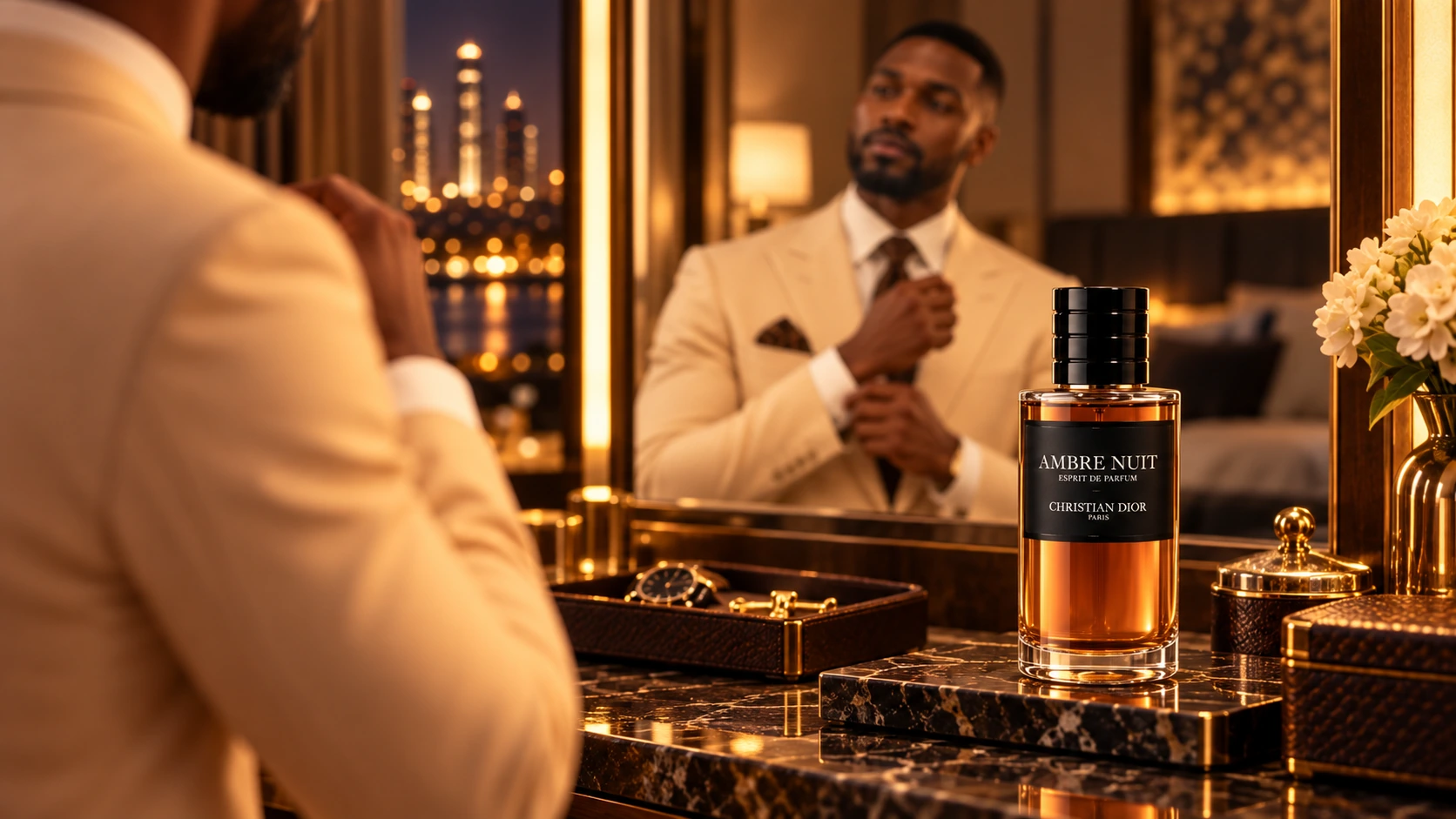
Dior Ambre Nuit Esprit de Parfum flirts with excess. The cinnamon has bite, the amber has weight, and the opening does very little to conceal either.
Then something more interesting happens. The composition begins to open out. Dry wood cuts through the sweetness, musk softens the edges, and what initially seems destined to become an enormous spicy amber reveals a surprising amount of space inside it.
That tension is the attraction: richness with air moving through it.
It also makes the Esprit a complicated proposition for anyone devoted to the original Ambre Nuit. Francis Kurkdjian’s 2024 interpretation gives spice and musk a much larger role. The familiar rose–amber relationship becomes harder to recognise beneath the new emphasis.
There is a compelling perfume here. Whether it is the Ambre Nuit you wanted is a separate argument.
The Opening Has Teeth
Cinnamon and cardamom can sound reassuring on paper. In this composition, they have enough presence to make reassurance beside the point.
Dior identifies the pair as the dominant spices, set against musk and the fragrance’s amber signature. Their effect is immediate warmth, with a dry, aromatic edge that gives the opening definition.
The useful distinction is between the two kinds of warmth. Cinnamon brings the more insistent, woody heat. Cardamom provides a rounder aromatic richness, helping the opening feel full rather than simply sharp. Together, they make the first impression unusually assertive for a fragrance whose predecessor was admired for its balance.
This is also where the Esprit starts dividing people. Some wearers may find the spice comforting and almost festive, while others might experience an abrasive, clove-like intensity that takes time to settle. The cinnamon can suggest gingerbread or a heavily spiced drink without the perfume becoming straightforwardly edible.
Those associations matter. “Spicy amber” is a broad description; the particular pleasure here depends on enjoying spice with some bite left in it. The opening has character because it resists becoming immediately soft and agreeable.
That does not make harshness a virtue. Someone who finds the first stage overwhelming is responding to a real feature of the fragrance, not failing to appreciate expensive perfumery.
The Esprit asks you to enjoy the heat before it offers much comfort.
The Amber Opens Up
The amber deserves a closer description than warmth alone. Its sweetness can feel balsamic and resinous, with a rounded texture and a darker undertone.
As the fragrance settles, the base can suggest a labdanum-like character. A faintly leathery impression may become easier to distinguish, adding another dimension to the sweetness.
The development can be subtle, registering as a change in the amber’s surface. The softer, sweeter impression may give way to something drier and more textured, while remaining recognisably part of the same accord.
This gives the heart something to explore beyond its initial fullness. The interest lies in the small distinctions between balsamic softness, resinous depth and that faint leather suggestion.
The Rose Changes the Argument
The original Ambre Nuit used rose to make its warmth more complicated.
Dior describes the Eau de Parfum around amber and velvety Damascus rose. That floral presence supplies a different texture within the warmth: something softer, more delicate and more clearly separated from the darker base.
The original’s appeal also involves its brightness. Detailed accounts describe citrus and floral facets remaining legible above the woody amber, giving the composition a degree of openness that makes it versatile without making it bland.
The Esprit redistributes that attention.
Rose has less authority. A floral trace may still register, particularly later in the wear, but spice, amber and musk determine the overall impression. Some wearers recognise a darker connection to the original; others experience a much more substantial departure.
This explains why the Esprit can receive enthusiastic praise and disappointed reactions from people who both love Ambre Nuit.
They are listening for different things.
An amber enthusiast may welcome the extra room given to resins and spice. A devoted wearer of the Eau de Parfum may hear the floral counterpoint becoming quieter and wonder why that particular part needed changing.
Both responses make sense. The original’s restraint was part of its composition, not necessarily a problem awaiting correction.
Nor does the Esprit become a failure simply because it changes the relationship. It is more interesting to judge what the new proportions achieve. The result offers a stronger emphasis on aromatic heat and sustained amber warmth, with less of the floral relief that made the original so distinctive.
That is a meaningful change in taste, not a straightforward step up a quality ladder.
A Long Drydown Has to Earn Its Hours
The Esprit can linger for around 15–16 hours on skin, leaving the base to carry a substantial part of the experience.
The later stages can feel more settled, with amber and musk forming a smoother, less sharply contrasted impression. Small changes in sweetness and softness become more noticeable as the opening’s intensity recedes.
This places more weight on the drydown’s definition. The remaining warmth needs enough texture to hold attention through a long, relatively steady finish.
The opening supplies the drama. The base has to sustain the interest.
The Price Demands More Than Staying Power
Ambre Nuit Esprit de Parfum occupies a price bracket where “it lasts a long time” becomes an inadequate defence.
The case for it has to come from the composition: the particular warmth of the spices, the dry definition within the amber, and the way the musky texture settles around them. These are the qualities that could make it worth returning to, even in a collection already crowded with ambers.
The case against it is equally concrete. The opening may be too insistent. The later development may feel too steady. Existing Ambre Nuit lovers may miss the rose more than they appreciate the added force.
A luxury price does not make those objections disappear.
The Esprit’s strongest achievement is giving a rich amber an expansive character. Its most questionable decision is asking that new balance to carry a name already associated with a different pleasure.
As a purchase, it makes sense for someone actively drawn to the spice and resinous warmth of the Ambre Nuit Esprit de Parfum composition. Loyalty to the original is a less reliable reason.
The rose may be what you miss.
The amber is what could make you forgive it.